
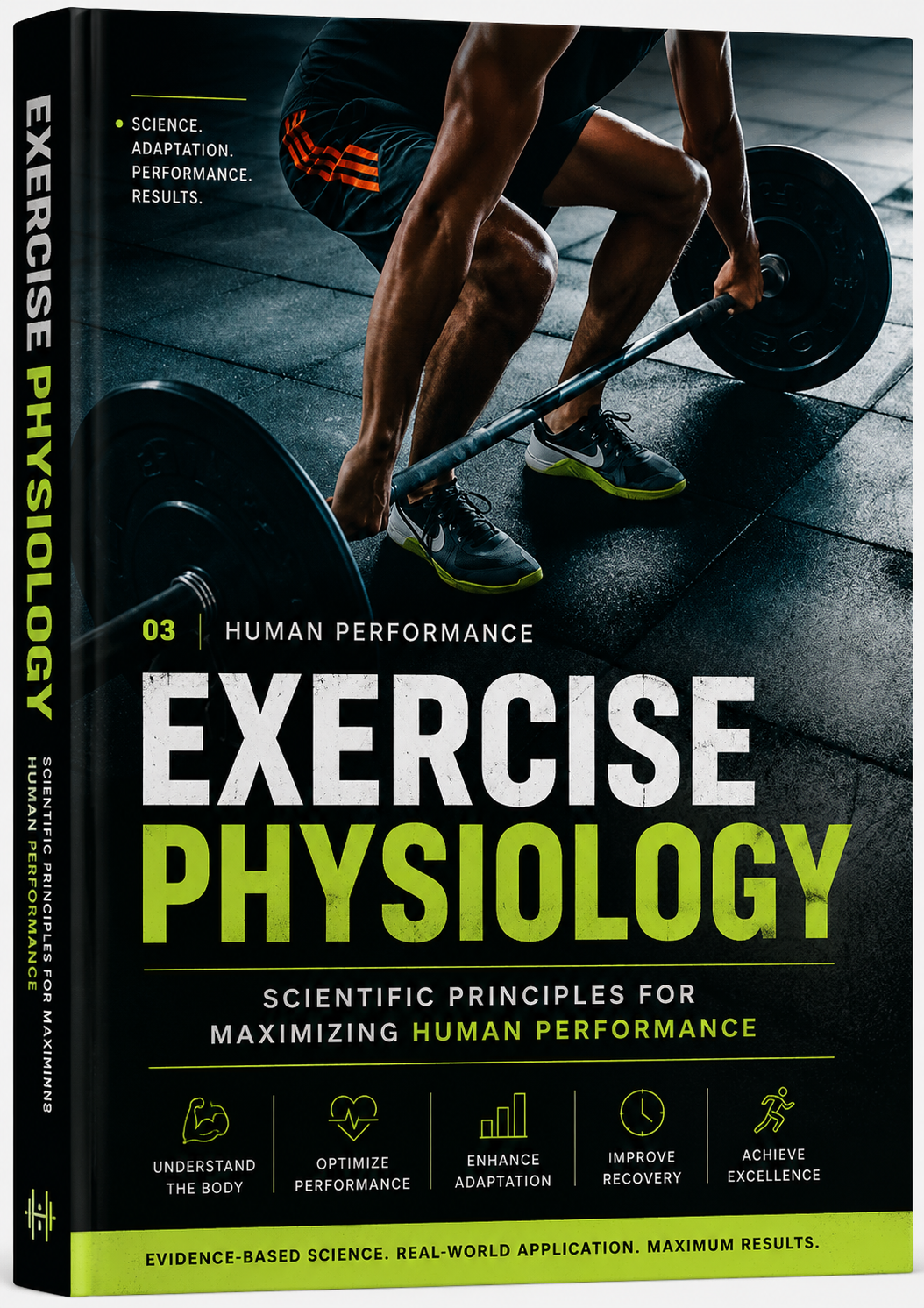
Exercise Physiology: Scientific Principles for Maximizing Human Performance
Discover the science behind how the human body adapts to exercise and unlock the physiological principles that drive strength, endurance, muscle growth, recovery, and long-term health. Exercise Physiology: Scientific Principles for Maximizing Human Performance is a comprehensive, evidence-based guide that transforms complex physiological research into practical knowledge for athletes, coaches, fitness professionals, students, and anyone seeking to better understand human performance.
Built upon decades of peer-reviewed research, clinical investigations, and foundational exercise science, this book explains how the body’s cardiovascular, respiratory, muscular, endocrine, and nervous systems respond and adapt to physical training. Rather than relying on trends or anecdotal advice, readers will learn the mechanisms supported by scientific evidence that influence athletic performance and overall physical health.
Inside you’ll discover:
- How skeletal muscles generate force, adapt to resistance training, and increase strength and hypertrophy.
- The physiology of aerobic and anaerobic energy systems and their role in endurance and high-intensity performance.
- Cardiovascular and respiratory adaptations that improve oxygen delivery and exercise capacity.
- The endocrine and hormonal responses that regulate metabolism, recovery, and training adaptations.
- Neuromuscular function and the science of motor learning, coordination, and performance.
- Recovery physiology, fatigue management, and evidence-based methods for optimizing adaptation between training sessions.
- The effects of aging, sex differences, environmental conditions, and genetics on exercise performance.
- How exercise influences metabolic health, cardiovascular disease risk, insulin sensitivity, bone health, and longevity.
- Practical applications of exercise physiology for designing effective training programs supported by current scientific evidence.
Written in an accessible style without sacrificing scientific accuracy, this guide bridges the gap between laboratory research and real-world training. Complex physiological concepts are explained in clear language with practical examples that help readers apply the science to improve performance, health, and fitness.
Rather than promoting shortcuts or unsupported training methods, Exercise Physiology: Scientific Principles for Maximizing Human Performance emphasizes critical thinking and evidence-based practice. Readers will learn how to interpret scientific findings, distinguish quality research from misinformation, and apply proven physiological principles to maximize results safely and effectively.
Whether your goal is increasing athletic performance, enhancing strength and endurance, improving overall health, or developing a deeper understanding of how the body responds to exercise, this book provides a solid scientific foundation supported by decades of exercise physiology research and modern sports science.
176 pages
Disclaimer
The information presented in this book is intended solely for educational and informational purposes. It summarizes findings from published scientific and clinical research but is not medical advice and should not be used to diagnose, treat, cure, or prevent any disease or medical condition. Individual responses to exercise and nutrition vary. Readers should consult qualified healthcare or fitness professionals before beginning any new training or nutrition program.
Note: While the methods and concepts discussed are informed by peer-reviewed scientific studies, no training approach or intervention is guaranteed to produce identical results for every individual. The scientific evidence presented should be considered within the context of the overall body of research, and recommendations may evolve as new evidence becomes available.
Reviews
There are no reviews yet.